Best Manychat Alternatives for Instagram DM Automation in 2026: 7 Tools Compared on Pricing, API Access, and Channels
Looking for a Manychat alternative? We compared 7 tools for Instagram comment-to-DM automation on pricing model, API and MCP access, channel coverage, and free plans, after Manychat cut its free tier to 25 contacts in March 2026.

TLDR: Manychat is the default for “comment X and I’ll DM you Y” automation, and three things push people away from it: contact-based pricing that spikes when a post goes viral, a free plan cut to 25 active contacts in March 2026, and an API that can trigger flows but not create them. We compared seven alternatives. PostZen is the pick for anyone who wants to run comment-to-DM automation from an API, an AI agent, or a dashboard, priced per connected account with no contact metering, on the same platform that publishes to ten networks. SendPulse is the pick for a visual bot builder with a free plan. Chatfuel and Customers.ai InstaChamp are the closest like-for-like Instagram bot tools. Respond.io is the omnichannel inbox for sales teams. SocialPilot and Agorapulse are schedulers with inbox automation and MCP servers rather than DM bots. Prices and features were checked on September 17, 2026.
Why look for a Manychat alternative?
Manychat earned its position. The Comments Growth Tool, story reply triggers, follow gates, and a flow builder that non-technical teams can use made it the tool most Instagram creators reach for first. The reasons businesses, creators, and marketers look for a Manychat alternative are:
- Pricing scales with your audience, not your usage. Manychat bills by “active contacts”, anyone who exchanged a message with your automation in the billing period. A viral Reel with a keyword trigger creates thousands of contacts in a day, and every one of them counts against the tier. The free plan was cut to 25 active contacts in the March 2026 restructure.
- No API for building automations. Manychat’s API can add subscribers, set tags and fields, and fire flows that already exist. It cannot create a flow, a keyword trigger, or a comment automation. If your product or agency wants to spin up a campaign per client or per launch programmatically, you cannot.
- No official MCP server. AI agents can only reach Manychat through community wrappers, which have the same limitations as the API.
- Channels stop at messaging. Instagram, Messenger, WhatsApp, TikTok, Telegram, SMS, and email are covered. Publishing, scheduling, analytics, and the rest of a social workflow require another tool.
Manychat pricing in 2026
Manychat moved to five contact-based tiers on March 2, 2026. From its pricing page on September 17, 2026:
| Plan | Monthly | Annual, per month | Active contacts | Channels |
|---|---|---|---|---|
| Free | $0 | $0 | 25 | 2 of Instagram, TikTok, Messenger, Telegram |
| Essential | $17 | $14 | 250 | 2 of the same four |
| Pro | $39 | $29 | 2,500 | 3, adding WhatsApp, SMS, email |
| Business | $99 | $69 | 7,500 | Unlimited |
| Advanced | $199 | $139 | 25,000 | Unlimited, no “Powered by Manychat” |
Overage on Pro is $0.05 per extra contact per month. The AI add-on is another $29 a month on Pro and Business, extra Inbox seats are $25 each, and WhatsApp messages are billed per delivered template on top of the plan since Meta’s July 2025 change. A Pro plan and one Reel with 4,000 keyword comments is 1,500 contacts over the limit, or an extra $75 that month, before the next post.
What to look for in a Manychat alternative
Every tool in this space sits on the same Meta feature, so the differences are in pricing model, access, and scope:
- Pricing unit. Per contact (Manychat, Chatfuel), per message (SendPulse), per seat (Respond.io, Agorapulse), or per social account (PostZen). Per-contact pricing is the only one where a good day costs you money.
- API and MCP access. Can software create and manage automations, or only trigger them? Can an AI agent do it?
- Channel coverage. Instagram comments and story replies are the core. Messenger, WhatsApp, and TikTok DMs matter to some teams; publishing and analytics matter to others.
- The Instagram feature set. Keyword modes, typo tolerance, story replies, link buttons, image cards, public replies, per-post versus account-wide, and logs.
- What else you get. A DM bot that also schedules posts and reads your inbox replaces two subscriptions.
1. PostZen: comment-to-DM automation from an API, an agent, or a dashboard
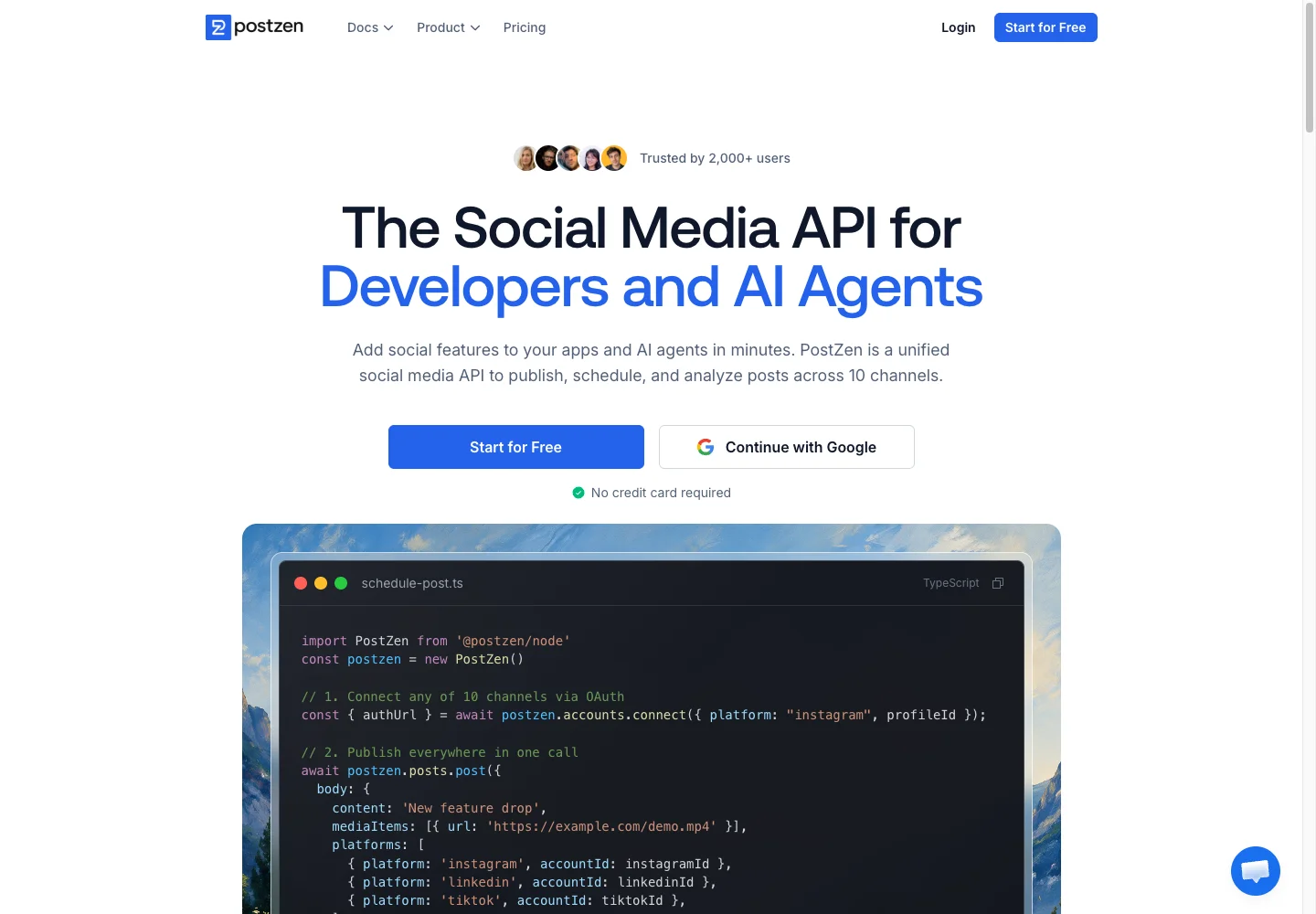
PostZen is a unified social media API. You can manage comments and DMs through one single inbox, and publish across 10 platforms from the same tool.
Pricing model: flat plans by connected social accounts, with a free tier. Comments, DMs, and triggers are not metered, so a post with 10,000 keyword comments costs the same as a post with ten. Plans are on the pricing page.
What the automation does:
- Watches one post, or every post on the account, or a PostZen post that has not published yet (the automation attaches when it goes live).
- Matches up to 50 keywords with
contains,exact, orwordmodes, exclusion keywords, case and accent insensitivity, and typo tolerance (one typo on words of 4 to 7 characters, two on longer ones), so “lnik” still gets the link. - Sends a DM with up to three link buttons, or an image card with a title, subtitle, and buttons, with up to five message variations rotated at random.
- Optionally posts a public reply under the comment, with its own variations and a delay.
- Handles story replies as a second trigger type.
- Logs every trigger with its outcome, and never messages the same person twice for the same automation.
API and MCP: full. POST /v1/comment-automations creates one; PATCH pauses or edits it; GET .../logs returns who was messaged and why. The MCP server exposes the same five operations as tools, so an agent can build the campaign from a prompt. The comment automations docs have the field reference.
curl -X POST https://api.postzen.dev/v1/comment-automations \
  -H "Authorization: Bearer $POSTZEN_API_KEY" \
  -H "Content-Type: application/json" \
  -d '{
    "accountId": "jh72r5nqk9wx3v8m1t4cz6bs0fy5dg3e",
    "name": "Launch guide",
    "platformPostId": "17900000000000001",
    "keywords": ["link", "guide"],
    "matchMode": "word",
    "typoTolerance": true,
    "dmMessage": "Here is the guide you asked for 👇",
    "buttons": [{ "type": "url", "title": "Open the guide", "url": "https://example.com/guide" }],
    "commentReply": "Sent you a DM!",
    "commentReplyDelaySeconds": 30
  }'
Channels: automations run on Instagram. Publishing covers ten platforms (Instagram, Facebook, Threads, X, LinkedIn, TikTok, YouTube, Pinterest, Bluesky, Telegram) and the inbox covers comments on Instagram, Facebook, and Threads plus Instagram DMs.
Pros:
- No contact metering; pricing by connected account
- Automations are a first-class API resource, with MCP tools for AI agents
- Word-level matching with typo tolerance, story replies, link buttons, image cards, public replies, per-trigger logs
- The same account publishes, schedules, and reads its inbox through one key
- Free tier includes the API
Cons:
- Automations are Instagram only; no WhatsApp, Messenger, TikTok, or Telegram DM bots
- No visual multi-step flow builder or conditional conversation trees; this is trigger, match, message, reply
Best for: developers, agencies, and products that want comment-to-DM campaigns created and managed by software, and anyone who wants DM automation and publishing in one place.
2. SendPulse: visual chatbot builder with a free plan
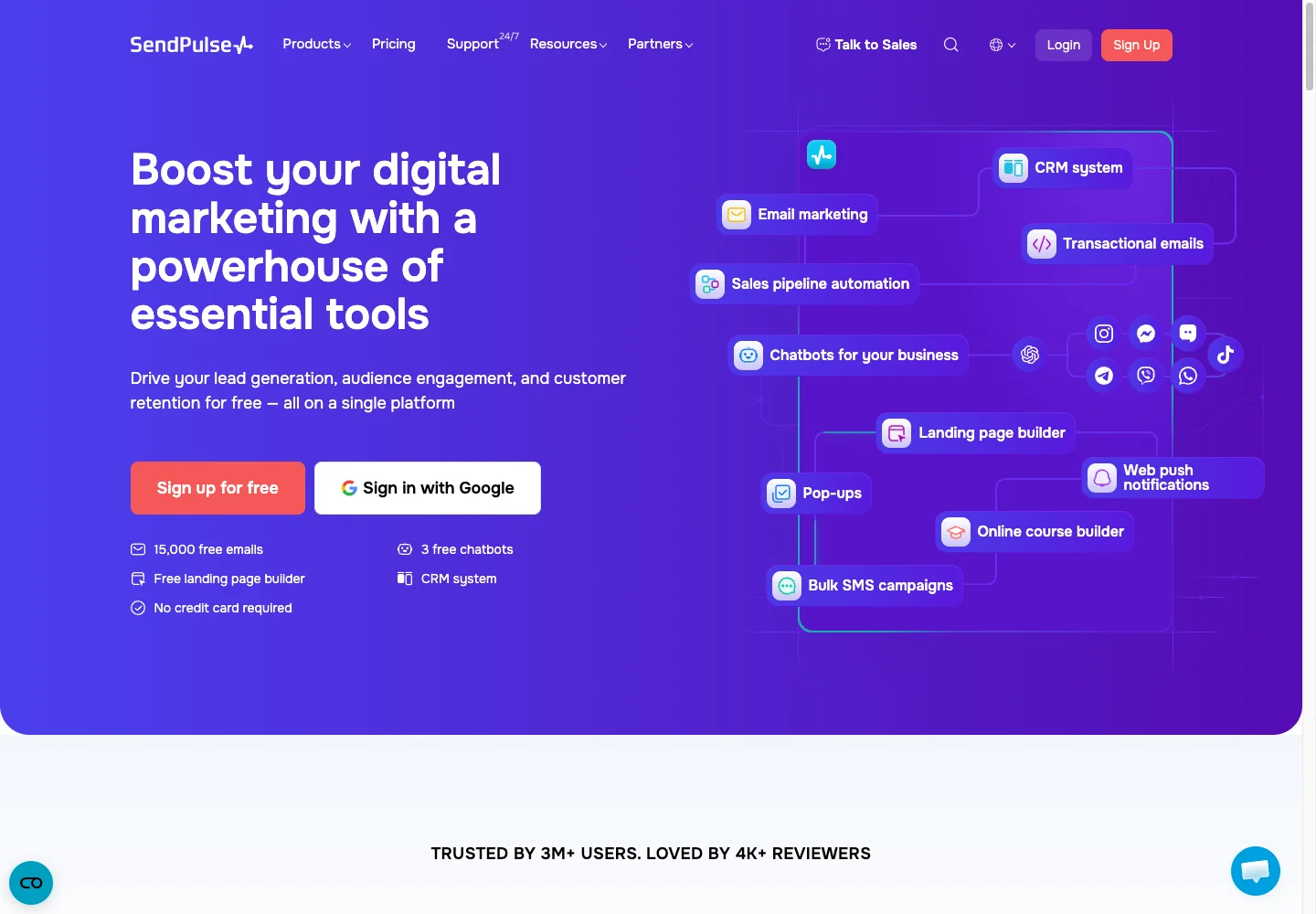
SendPulse is a multi-channel marketing platform whose chatbot builder covers Instagram, Facebook Messenger, WhatsApp, TikTok, and Telegram, alongside email, SMS, and web push.
Pricing model: per subscriber, with a free chatbot plan capped by messages per month and paid chatbot tiers starting around $10 a month for 500 subscribers. Each SendPulse product (chatbots, email, courses) has its own pricing page.
Comment-to-DM: yes, a documented Instagram comment automation flow that turns a keyword comment into a DM.
API and MCP: flows can call external APIs from inside the builder, and SendPulse has a general API, but creating a chatbot flow from scratch through the API is not documented. No MCP server found.
Pros: visual builder, multi-channel messaging, free plan, everything-in-one marketing suite.
Cons: fragmented pricing across products, a crowded interface, and shallow analytics for the bot side.
Best for: small businesses that want a no-code bot across Instagram, WhatsApp, and email in one subscription.
3. Chatfuel: the closest like-for-like Instagram bot
Chatfuel has been building Messenger and Instagram bots as long as Manychat has, and its feature list on the pricing page names automatic replies to post comments and Reel comments explicitly.
Pricing model: per contact, restructured in mid-2026. The published figures we found on September 17 conflicted with each other across Chatfuel’s own pages, so check the pricing page directly; the shape is a contact-tiered plan with a free trial and no permanent free plan.
Comment-to-DM: yes, for posts and Reels, on the business tier.
API and MCP: no public API for creating automations documented; no MCP server found.
Pros: mature Instagram and WhatsApp bot builder, AI conversation features, website widget.
Cons: the same contact-based pricing exposure as Manychat, no free plan, pricing that is hard to pin down.
Best for: teams that want a Manychat-style builder from a different vendor and are not sensitive to per-contact billing.
4. Customers.ai InstaChamp: the budget Instagram DM tool
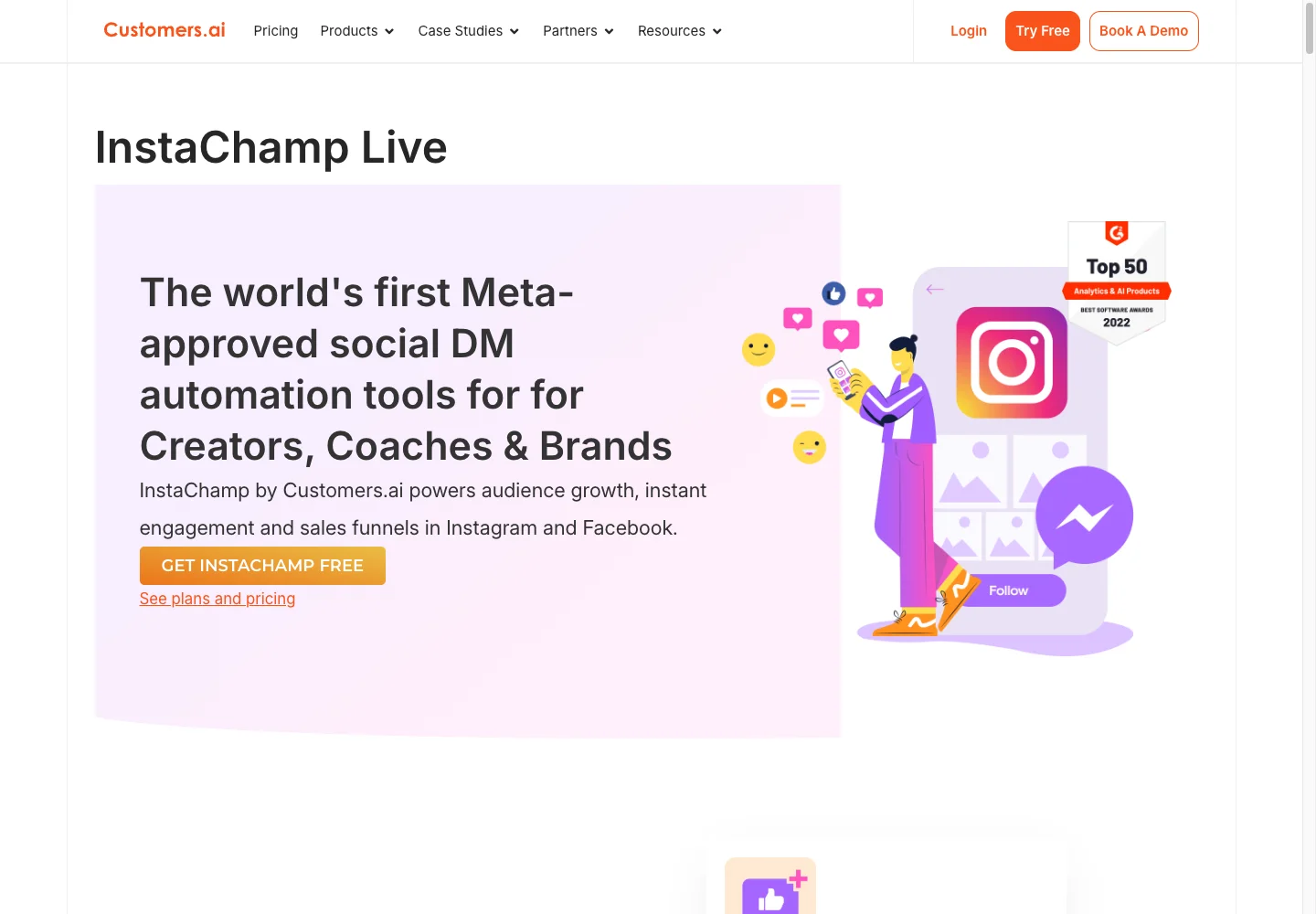
InstaChamp is the Instagram and Facebook DM automation product inside Customers.ai, a Meta-approved partner. It does the comment-to-DM and keyword-trigger basics and little else.
Pricing model: a free tier and a Platinum plan at $9.95 a month, per the InstaChamp page.
Comment-to-DM: yes; it is the core product.
API and MCP: none documented on the product page.
Pros: cheapest paid option here, focused on exactly this job, Meta partner status.
Cons: narrow feature set compared with Manychat, and the wider Customers.ai platform is quote-priced and aimed at a different buyer.
Best for: a creator who wants a cheap keyword-to-DM tool and nothing else.
5. Respond.io: omnichannel inbox for sales teams
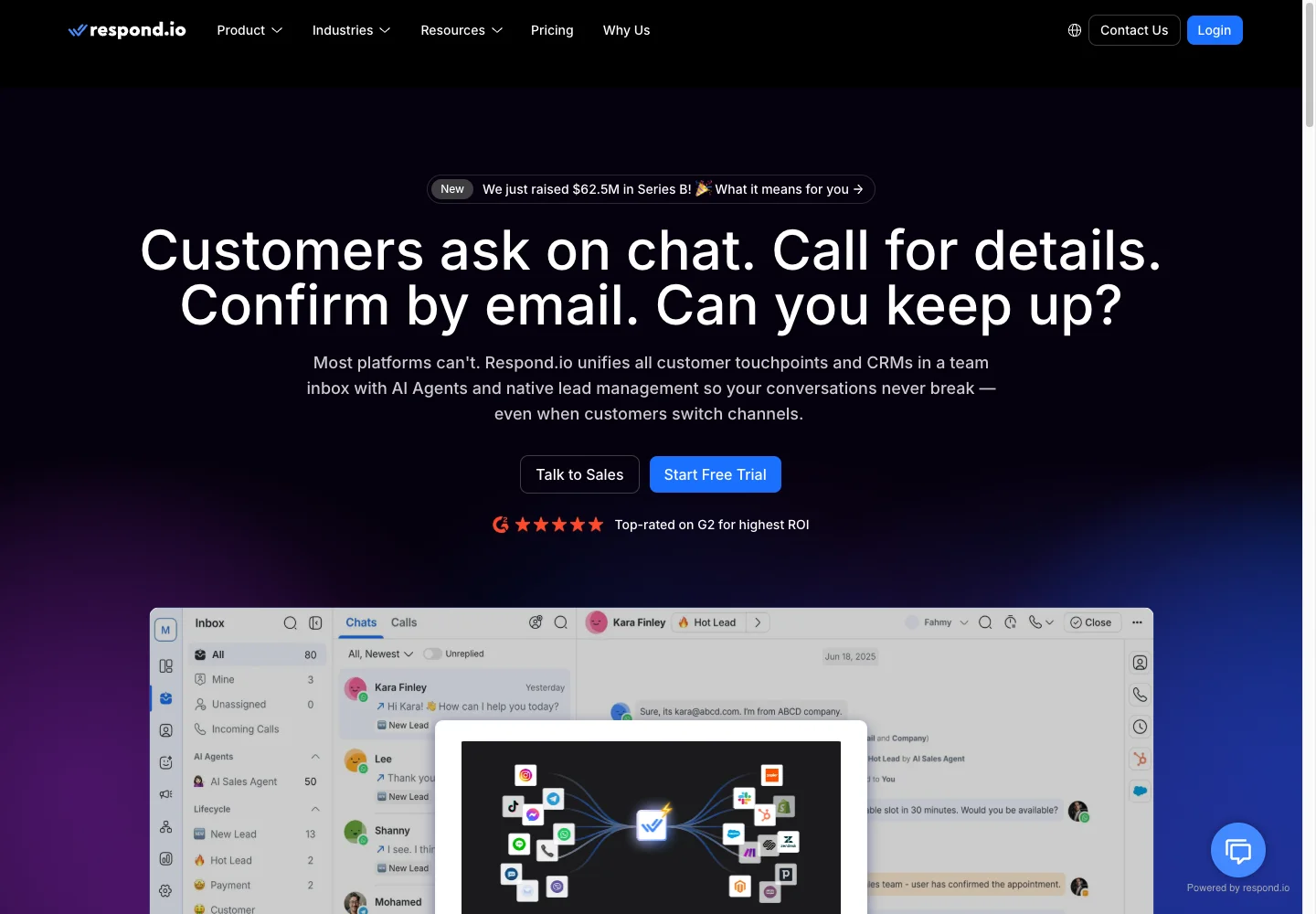
Respond.io is a conversation platform: WhatsApp, Instagram, Messenger, Telegram, SMS, email, and web chat in one inbox with workflow automation and AI agents on top.
Pricing model: per seat. Starter is $79 a month billed annually ($99 monthly) with a 7-day trial and no free plan; the Growth tier that unlocks AI agents and full automation is $159 a month.
Comment-to-DM: partial. Respond.io supports private auto-replies to Instagram comments, but its own help docs and feature board confirm that public comment replies are not managed inside the product, so the “DM plus public reply” pattern is half there.
API and MCP: a workflows module and a documented API for building automations. No MCP server found.
Pros: real omnichannel inbox, routing, CRM integrations (HubSpot, Salesforce), AI spam filtering.
Cons: expensive for a creator or a small team, and the useful automation lives on the second tier.
Best for: mid-market sales and support teams for whom Instagram is one channel among many.
6. SocialPilot: scheduler with inbox automation and MCP
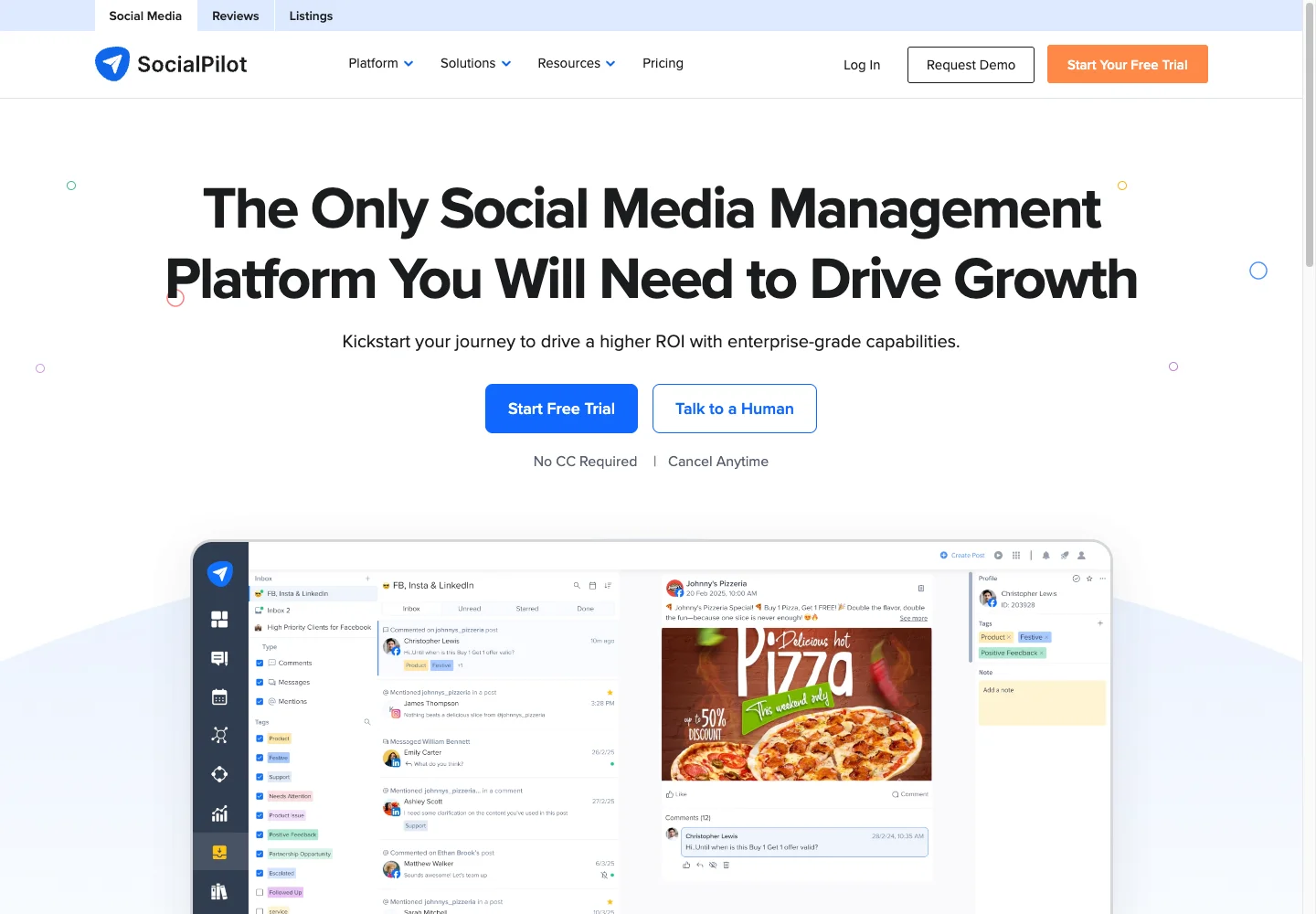
SocialPilot is a scheduling tool across ten networks (including Bluesky and Threads) with a social inbox, AI content help, white-label options, and an MCP server included on every plan.
Pricing model: per plan with account caps. Essentials is $30 a month ($25.50 annual) with a 14-day trial and no free plan.
Comment-to-DM: not as a flow. SocialPilot’s inbox automation replies to posts and comments on Standard and above, but it is inbox-reply automation rather than a keyword-to-private-DM trigger.
API and MCP: an MCP server on every tier, aimed at scheduling and inbox tasks; no open API for building DM automations.
Pros: broad publishing coverage, inbox, white-label, MCP included.
Cons: not a DM bot, no free plan, and two of its own pricing pages disagree on tier prices.
Best for: agencies that want scheduling plus light inbox automation and an MCP hook.
7. Agorapulse: inbox and scheduling with MCP for ChatGPT and Claude
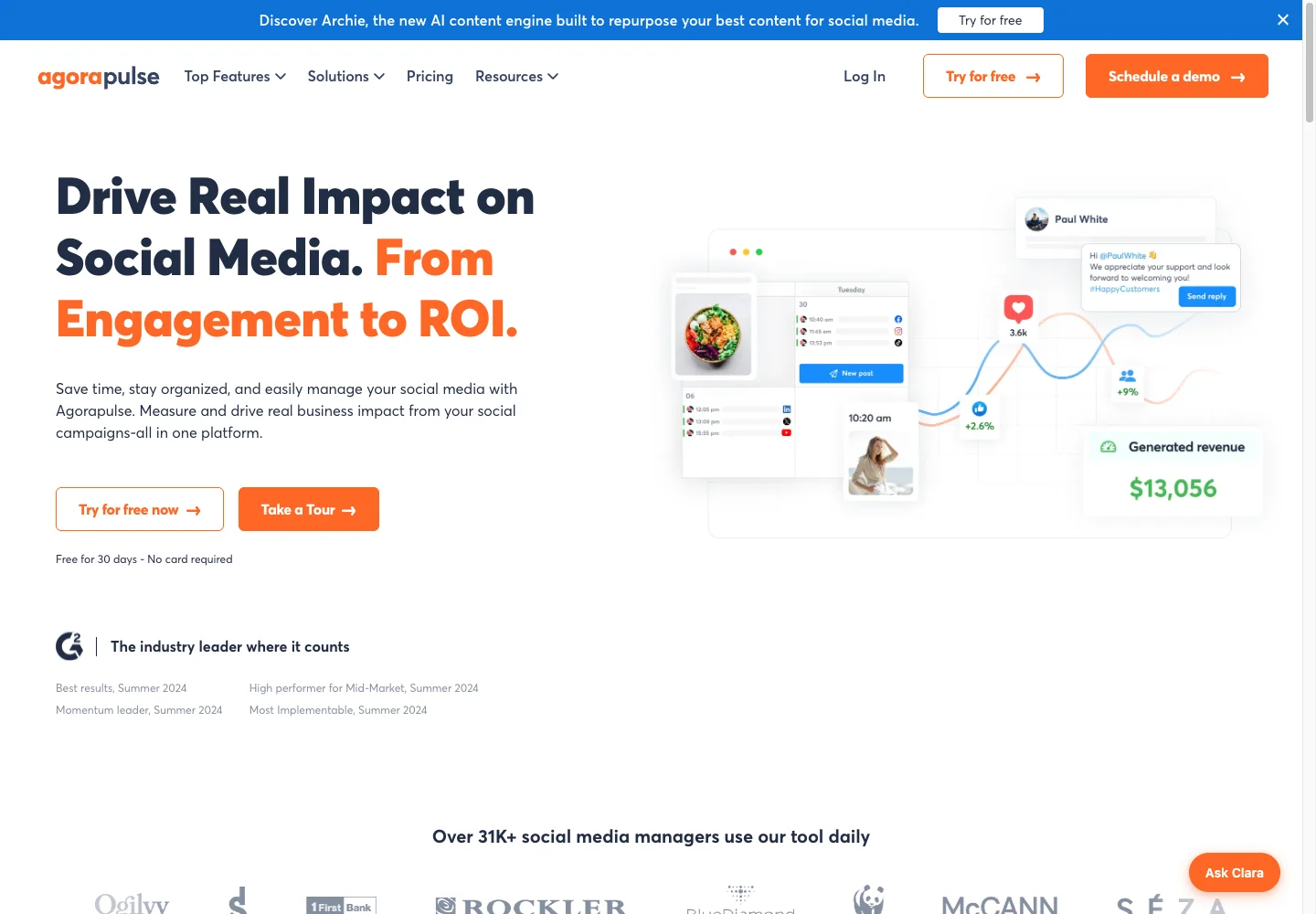
Agorapulse is a scheduling and social inbox platform for teams and agencies with strong reporting and a self-hosted MCP server that its pricing page lists as an integration for ChatGPT and Claude on paid tiers.
Pricing model: per user. Standard is $79 a user a month billed annually, $99 monthly, with a 30-day trial; the permanent free plan ended in August 2024.
Comment-to-DM: no. Agorapulse queues and moderates replies and handles ad comments, but it does not run keyword-triggered DM flows.
API and MCP: a reports API on the Custom tier and an MCP server on paid tiers; no automation API.
Pros: unified inbox with assignment and response-time reporting, unlimited scheduling, CRM integrations.
Cons: no DM automation, no free plan, per-user pricing that stacks for agencies.
Best for: social teams that need inbox workflow and reporting more than bots.
Manychat alternatives compared
| Tool | Pricing unit | Free plan | Comment-to-DM | API for automations | MCP server | Channels |
|---|---|---|---|---|---|---|
| PostZen | Per connected account | Yes | Yes, Instagram, with story replies | Yes, full CRUD plus logs | Yes, automation tools included | Automations on Instagram; publishing on 10 platforms; inbox on Meta platforms |
| Manychat | Per active contact | 25 contacts | Yes | Trigger only, cannot create | No official | Instagram, Messenger, WhatsApp, TikTok, Telegram, SMS, email |
| SendPulse | Per subscriber | Yes, message-capped | Yes | Limited | No | Instagram, Messenger, WhatsApp, TikTok, Telegram, email, SMS |
| Chatfuel | Per contact | Trial only | Yes | No | No | Instagram, WhatsApp, TikTok, web |
| InstaChamp | Flat | Yes | Yes | No | No | Instagram, Facebook |
| Respond.io | Per seat | Trial only | Private replies only | Yes | No | 7 messaging channels |
| SocialPilot | Per plan | Trial only | Inbox replies only | No | Yes | 10 networks |
| Agorapulse | Per user | Trial only | No | Reports only | Yes | 7 networks |
How Instagram comment-to-DM automation works under Meta’s rules
Every tool in this list, Manychat included, is a client of the same Meta feature, and its rules explain most of the limits you will hit anywhere:
- Private replies. A business account can send one direct message to a commenter in reply to their comment, without the commenter having messaged first. This is the mechanism behind every “comment X and I’ll DM you” campaign. The API call is a message with the comment ID as the recipient.
- One reply per comment, within seven days. Meta allows exactly one private reply per comment, and it must be sent within seven days of the comment. That is why no tool can DM the same person twice for the same comment, and why a retry after a failed send is safe.
- Story replies open a window. A reply to your story is a message, so it opens the standard 24-hour messaging window and the tool can respond as a normal DM.
- Permissions and review. The account has to be a business or creator account, and the app needs Meta’s messaging permission for Instagram, which requires app review with a screencast. This is why new tools take months to ship the feature and why PostZen’s Instagram integration guide spends so long on review.
- Webhooks, not polling. Comments arrive through Meta’s webhook subscription on the account. A tool that polls would miss the seven-day window on old comments and burn rate limits on new ones.
None of the tools can do more than Meta allows. What they differ on is how you create the automation, what you pay, and what else lives on the same platform.
Which Manychat alternative should you choose?
- You want to create and manage automations from code or an AI agent: PostZen. It’s the only tool here where the automation is an API resource with MCP tools, and it is priced per account.
- You want a no-code bot across Instagram, WhatsApp, and email with a free plan: SendPulse.
- You want the Manychat experience from a different vendor: Chatfuel, accepting per-contact pricing.
- You want the cheapest keyword-to-DM tool and nothing else: Customers.ai InstaChamp.
- You run a sales or support team across many messaging channels: Respond.io.
- You want scheduling and an inbox with an MCP server, and DM bots are secondary: PostZen or Agorapulse.
If the thing that brought you here was a Manychat bill after a good week, the fix is the pricing unit, and only PostZen, InstaChamp, and the per-seat tools remove the per-contact exposure entirely. If it was the missing API, PostZen and Respond.io are the two with one. PostZen’s unifiedsocial media API page lists everything else the same key does, and the comparison of social media APIs covers the publishing side in depth.
Start for free with 2 accounts, or read the API docs to see what building on PostZen is like.
Frequently asked questions
What is the best Manychat alternative for developers?
PostZen. It exposes comment-to-DM automations as a REST API and as MCP tools, so an app or an AI agent can create, update, pause, and read the logs of an automation without opening a dashboard. Pricing is by connected account, not by contact, and the same account publishes to ten platforms and reads its inbox through the same key.
Is there a free Manychat alternative?
PostZen and SendPulse both have permanent free plans. PostZen's free tier includes a small number of connected accounts with the API and automations available; SendPulse's chatbot free plan is capped by messages per month. Manychat's own free plan dropped to 25 active contacts in March 2026, which is enough to test but not to run a campaign.
Which Manychat alternative works with AI agents?
PostZen ships an MCP server with tools to list, create, get, update, and delete comment automations, so Claude, ChatGPT, Cursor, or any MCP client can set up a comment-to-DM campaign from a prompt. Agorapulse and SocialPilot also offer MCP servers, but for scheduling and inbox rather than DM automation. Manychat has no official MCP server.
How does Instagram comment-to-DM automation actually work?
Every tool uses Meta's private reply feature. When someone comments on a post, the business account can send that person one direct message in reply to the comment, within seven days, without the person having messaged first. The tool listens for comments through Meta's webhooks, matches keywords, and sends the DM. Meta allows exactly one private reply per comment, which is why no tool can DM the same commenter twice for the same comment.
Why is Manychat so expensive?
Because it bills by active contact, meaning anyone who messaged your bot in the billing period. A single Reel that gets 3,000 comments with a keyword trigger can push a Pro plan past its 2,500 included contacts and into overage fees at five cents per contact, or into the next tier. Tools priced by account or by seat do not have that exposure.
Does Manychat have an API?
A limited one. The Manychat API can create and tag subscribers, set custom fields, and trigger flows that already exist. It cannot create or edit flows, keyword triggers, or comment automations, so campaigns still have to be built by hand in the flow builder. That is the gap the API-first alternatives in this guide fill.
Keep reading